Homes across Watertown were mostly built from the nineteen-forties through the early nineteen-seventies, and the electrical services in Boston network sends electricians who work in these houses every week - wood-frame two- and three-family homes with panels in the basement, two-prong outlets in the bedrooms, and circuits that were never counted for a modern kitchen. A professional electrical panel upgrade is one of the most common calls here, because the original sixty- or hundred-amp service was sized for a load that no longer resembles what these houses run.
When a house was wired for one era and is being asked to carry another, a local electrician who already knows the construction makes the difference between a clean job and a disruptive one.
What Local Electricians Know About Watertown Homes
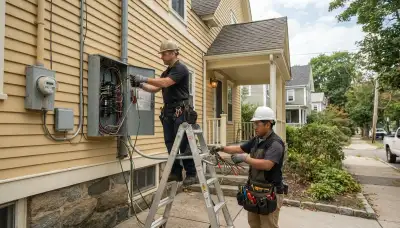
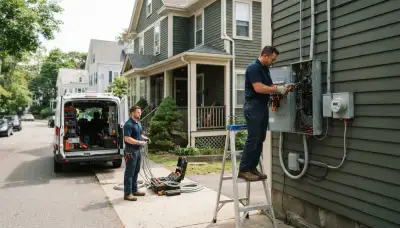
Most houses here sit over full basements with the panel on the foundation wall, which puts the service equipment in a predictable place but means every circuit run to the upper floors travels through finished walls. A local electrician knows that before touching the first wire.
Two kinds of work come up constantly in Watertown homes: panels that have run out of room for new breakers, and ungrounded outlets that were never brought forward when a room was renovated. Homeowners in Cambridge, MA face similar situations with houses from the same decades.
Getting a problem looked at early almost always costs less than waiting until a breaker stops resetting or an outlet stops holding a plug.
Electrical Work Matched to How Watertown Homes Are Built
An off-the-shelf approach fails in these houses because the work does not just involve swapping a part - it involves tracing wiring through plaster walls, working around knob-and-tube that may still be live in a section of the attic, and pulling permits for work that touches the original service.
Wood-frame homes with finished basements need circuits routed carefully to avoid opening ceilings. Attached two-family homes share walls that complicate any run from one unit to the next. Detached single-family homes with a garage or shed often have outdoor runs that have aged past their rated life. Expert electrical wiring work in these houses accounts for all of that before the first cut is made.
The range of work that fits Watertown homes includes quality GFCI circuit installation near every sink and wet area, reliable smoke detector installation throughout the floors that older wiring never covered, specialist electric car charger installation for garages that were never wired for that load, and professional ceiling fan installation in rooms where the original box was never rated for a fan.
How Watertown Homes Were Built Still Decides What They Need
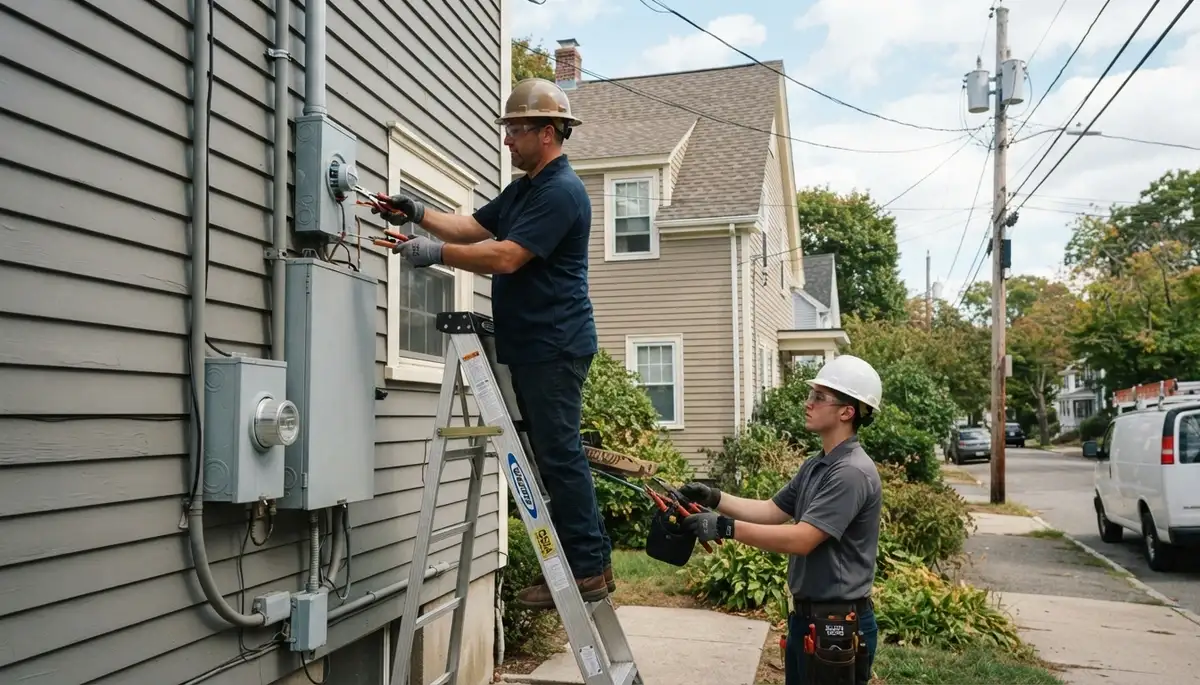
Most houses here went up from the nineteen-forties through the early nineteen-seventies - a span when sixty-amp fuse boxes were standard, grounding was not required, and a kitchen circuit was expected to run a refrigerator and little else. Three things follow from that and still shape every job: the panel is probably undersized, the outlets are probably two-prong, and at least some of the wiring may be aluminum in the circuits added during the late nineteen-sixties.
Fuses Where Breakers Should Be
A fuse box that has been in service for decades was not built to handle a dishwasher, a microwave, and a window unit on the same floor. When a fuse blows repeatedly, homeowners sometimes install a larger fuse - which removes the only protection that circuit had. Left alone, that wiring runs hotter than it was ever rated for.
Local electricians replace the fuse box with a properly sized breaker panel and confirm that the service entrance can handle the new capacity. Homeowners in Somerville, MA with houses from the same decades go through the same upgrade.
Outlets Warm to the Touch
An outlet that feels warm, or a light that dims when something else starts on the same circuit, points to aluminum branch wiring - common in homes from the late nineteen-sixties. Aluminum expands and contracts at a different rate than the devices it connects to, and the connection loosens over time.
Electricians correct this by installing approved connectors at every device on the affected circuits, or by replacing the devices with ones rated for aluminum. Either way, the warmth goes away and the connection holds.
Two-Prong Outlets Throughout the House
Two-prong outlets mean the circuit was never grounded. Every modern appliance with a three-prong plug is running without the fault path it was designed to use. Years of that arrangement leaves the homeowner exposed and the appliances unprotected.
Replacing two-prong outlets or adding the outlets with test and reset buttons brings those circuits up to a standard that protects both the wiring and the equipment plugged into it.
A Service Sized for a Smaller House
A car charger in the garage, a new air conditioning unit, and a home office on the same panel that was sized for a house with no central air is a combination the original service was never meant to carry. The panel runs at capacity before the dryer starts.
Adding a subpanel or upgrading to a two-hundred-amp service gives the house room for every load it carries now plus what the homeowner adds next. The car charges overnight, the air conditioning starts without dimming the lights, and the breaker stays reset.
Basement Panels Behind Finished Walls
When a basement was finished after the panel was installed, the work that reaches the panel sometimes means moving stored items, cutting into drywall, or working in a space with low clearance. That physical constraint changes how long a job takes and what it costs to do it right.
Local electricians plan the access before starting, work in the smallest opening that gets the job done cleanly, and patch what was opened so the homeowner is not left with a hole in the wall.
Call (617) 917-2122 to arrange a no-pressure visit from a local electrician who can look at the panel, the outlets, and the circuits in your home and tell you exactly what needs attention.
On Call Electrical brings straightforward work and results that hold to every home in Watertown.

Full Electrical Services Available in Watertown, MA
The work below covers the full range of what local electricians handle for homeowners here. Find the situation that matches yours and reach out.
Urgent Electrical Repairs in Watertown, MA
- Electrical Repair - a breaker that will not reset or an outlet that stopped working in a home where the wiring has been in place for decades
- Outlet Repair - outlets that spark, feel warm, or no longer hold a plug in rooms that were wired before grounding was required
- Switch Repair - switches that click without result or feel loose in walls where the original wiring has never been touched
- Fire Alarm Installation - detectors placed where the older floor plan leaves gaps that a smoke alarm would not reach on its own
- Home Electrical Inspections - a full look at the panel, the circuits, and the outlets before a problem becomes a repair
If something in the house has stopped working or started behaving differently, that is the right time to call.
Panel, Service, and Wiring Work in Watertown, MA
- Electrical Panel Upgrade - replacing a fuse box or undersized breaker panel in a house that was never sized for what it runs today
- Electrical Panel Installation - a new panel for a home where the original equipment has reached the end of its service life
- Electrical Service - bringing the service entrance up to a capacity that matches the loads the house actually carries
- Electrical Wiring - replacing or extending wiring in walls and ceilings where the original runs are no longer adequate
- New Construction Wiring - full wiring for an addition or a finished space that was not part of the original house
Homes built from the nineteen-forties through the early nineteen-seventies were wired for a fraction of what they carry now, and the panel is usually the first place that shows it.
Safety and Protection Work in Watertown, MA
- GFCI Circuits - the outlets with test and reset buttons in every kitchen, bathroom, and wet area where the original wiring offered no protection
- Whole Home Surge Protection - a device at the panel that stops a voltage spike from reaching every appliance and fixture in the house
- Lightning Surge Protection - protection at the service entrance for a house where a strike on the line would otherwise travel straight to the panel
- Smoke Detector Installation - detectors on every floor and outside every sleeping area in a house where the original layout left gaps
- Home Energy Audit - a look at where the electrical system is working harder than it needs to and what that costs the homeowner each month
An older house carries risks that were not visible when it was built. Getting them identified and corrected before something fails protects the home and everyone in it. Local electricians handle all of this work in Watertown, MA homes and know what to look for in houses built the way these were.
Lighting, Outdoor, and Added-Load Work in Watertown, MA
- Electric Car Charger Installation - a dedicated circuit and outlet in a garage that was never wired for that kind of draw
- Recessed Lighting Installation - fixtures cut into ceilings where the original wiring ran surface-mounted or pull-chain lights
- Landscape Lighting - outdoor circuits run to yards and driveways where no exterior wiring existed before
- Generator Installation - a standby or portable connection that keeps the house running when the service goes out
- Security Lights - motion-activated fixtures on the exterior of a house where the original construction left the perimeter dark
Every load that gets added to a Watertown home - a charger, a new fixture, an outdoor run - needs a circuit that was sized for it. Local electricians plan that work so the panel handles what is asked of it today and has room for what comes next.