Most houses across Allston were built from the early 1900s through the 1950s as wood-frame, multi-unit structures with basements, and the panels and wiring inside them reflect that age. The electrical services in Boston network connects homeowners here to electricians who recognize a fuse box that has been pushed past its limit, an outlet warm to the touch, or a breaker that will not reset - and who know what sits behind each one. Pair that reach with expert electrical panel upgrade work and the fix addresses the actual cause.
Because these homes were built for a load that bears no resemblance to what a household runs today, a local electrician who has worked inside them knows where the problems hide and what it takes to correct them without opening every wall.
What Local Electricians Know About Allston Homes
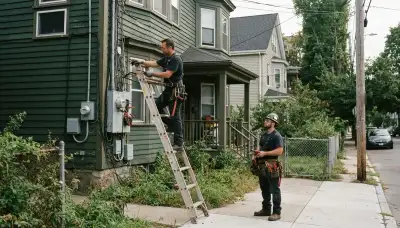
Houses here were built as wood-frame, multi-unit structures, most with full basements where the panel sits. A local electrician knows that the basement access is rarely straightforward and that shared walls between units mean one circuit often feeds more than one tenant expects.
The work these homes most often need falls into two groups: panels that have no room left and wiring that was run before grounding was required. Homeowners in Cambridge, MA deal with similar conditions in homes of the same age.
Waiting on either problem lets it grow into something that costs more to correct and creates risk in the meantime. Arrange a visit before the next breaker trip.
Work Matched to How Allston Homes Are Built
An approach that works in a newer slab-on-grade house fails in a wood-frame building with a finished basement and shared walls. Running a new circuit here means tracing what is already in the walls before adding anything, because original wiring does not always follow a predictable path.
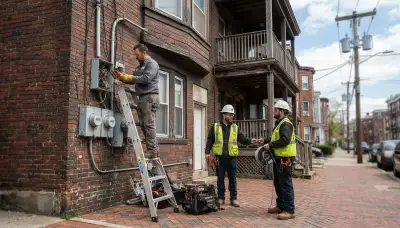
Detached triple-deckers carry wiring that was extended over decades by multiple hands, each addition layered onto the last. Row-style attached homes share service equipment in ways that affect how work is scoped and what must be coordinated. Reliable GFCI circuit installation protects the kitchens and bathrooms in both.
Four services that fit what Allston homes are being asked to carry: professional electrical panel installation for boxes that have run out of room, quality smoke detector installation in homes where detection was never wired in, specialist whole home surge protection for panels feeding multiple units, and expert electric car charger installation for garages and off-street parking that were never wired for that load.
When Allston Homes Were Built Still Shapes What They Need
Most homes here went up in the early 1900s through the 1940s and 1950s, a period when a 60-amp fused service was considered adequate and grounding was not required. Three things follow directly from that: fuse boxes still in place where a breaker panel belongs, two-prong outlets throughout the house, and wiring that has carried current for the better part of a century.
Fuses Where Breakers Should Be
A homeowner sees a fuse box in the basement and replaces blown fuses when a circuit goes out. Behind that is a service sized for a household running a few lamps and a refrigerator. Left alone, the temptation to install a larger fuse than the wiring can handle creates a fire risk that the original equipment was never designed to manage.
Local electricians replace the fuse box with a properly sized breaker panel and bring the service up to what the house actually draws. Homeowners in Brighton, MA with the same original equipment have made the same correction with the same result: a panel that handles the load without improvisation.
Two-Prong Outlets Throughout the House
A homeowner notices that none of the outlets accept a three-prong plug without an adapter. What sits behind that is wiring installed before grounding was required, meaning the third prong on every appliance has nowhere to send a fault. Left alone, that gap leaves every grounded device in the house without the protection it was designed to have.
Adding grounded outlets to a home of this age means evaluating what the existing wiring can support and running the correction in a way that holds without disturbing finished walls any more than necessary.
Wiring That Has Run for Decades
Insulation on wiring from this period becomes brittle over time and can crack where it passes through framing or rests against a junction box. What the homeowner notices is a breaker that trips for no clear reason or a faint burning smell near an outlet. The wiring can no longer carry the current it once did without generating heat at every weak point.
Replacing the affected runs restores safe capacity and removes the heat source. It also gives the homeowner a clear picture of what the rest of the wiring looks like and what, if anything, needs attention next.
Panels Not Sized for What Was Added
A car charger, a window air conditioner, and a chest freezer in the basement are each reasonable additions. Together they push a service that was sized for far less than it now carries. On a warm day when the air conditioning runs continuously, the panel has no margin left and something trips or runs hot.
Adding a sub-panel or upgrading the main service gives the house the capacity it needs for the loads already on it and room for what comes next. The homeowner can run the charger and the air conditioning at the same time without managing which circuit is on.
Basement Access and Finished Ceilings
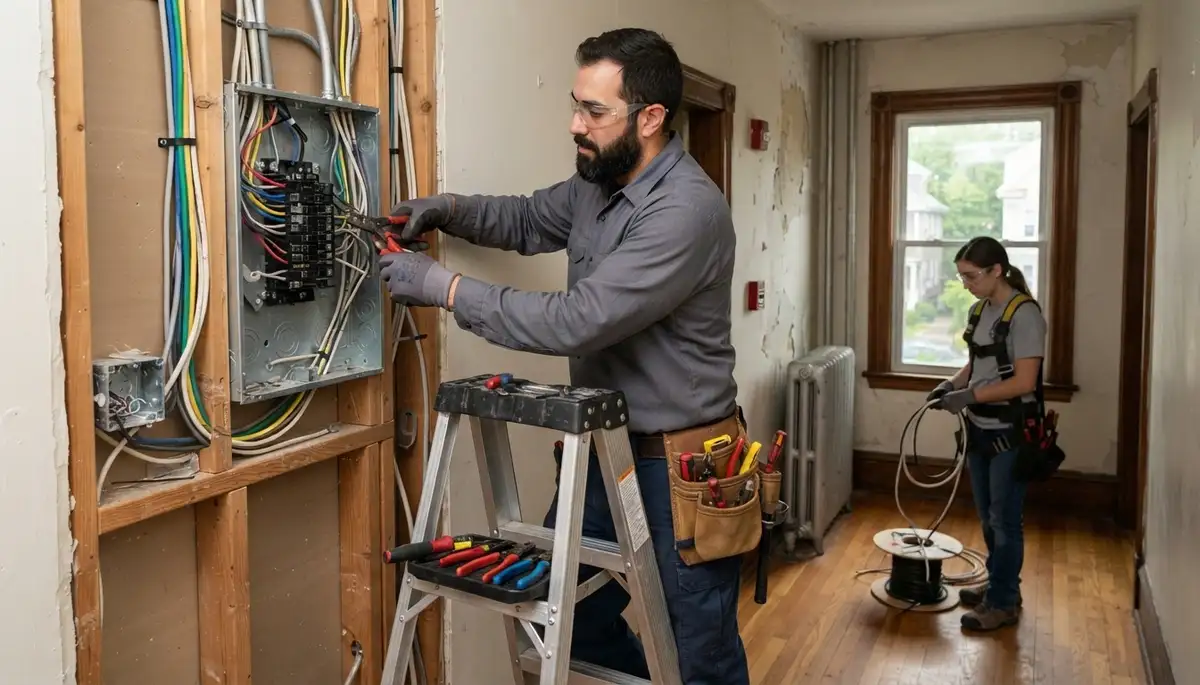
In a wood-frame home with a finished basement ceiling, running a new circuit from the panel to a first-floor room means working through finished material rather than open joists. The physical constraint adds time and requires a plan for how the work gets done without leaving a ceiling in pieces.
Local electricians who have worked in these basements know where the joists run and how to route new wiring with the fewest cuts. The work gets done cleanly and the homeowner does not spend the next month patching.
Call (617) 917-2122 to arrange a no-pressure visit with a local electrician who can look at what the house has, explain what it needs, and give a straight answer about what the job involves.
On Call Electrical delivers work in Allston, MA that holds because it is matched to how these homes are actually built.

Full Electrical Services Available in Allston, MA
The work below covers what homeowners in Allston, MA most often need. Find the item that matches what is happening in the house and reach out to get it looked at.
Urgent Electrical Work for Allston, MA Homes
- Electrical Repair - for a breaker that will not reset or an outlet that stopped working without explanation
- Outlet Repair - for outlets that are warm, discolored, or no longer hold a plug
- Switch Repair - for switches that spark, stick, or control nothing at all
- Home Electrical Inspections - for a house whose wiring has not been evaluated since it was installed
- Fire Alarm Installation - for homes where detection was never hardwired into the structure
If something in the house is not behaving the way it should, the right move is to have it looked at before it becomes a larger problem.
Capacity and Wiring Work for Allston, MA Homes
- Electrical Panel Upgrade - for a panel that has no empty slots and trips under normal use
- Electrical Panel Installation - for a fuse box that belongs in a different era
- Electrical Wiring - for circuits that were added over decades without a consistent plan
- Electrical Service - for a service entrance that was sized for a household running far less than it does now
- New Construction Wiring - for additions and finished spaces that need circuits run from scratch
Homes built in the early and mid 1900s were wired for a load that bears no resemblance to what a household draws today, and the panel is usually the first place that gap shows up.
Safety and Protection Work for Allston, MA Homes
- GFCI Circuits - for kitchens and bathrooms where the outlets with test and reset buttons were never installed
- GFC Outlets - for individual locations near water that need protection the original wiring did not provide
- Whole Home Surge Protection - for panels feeding multiple units where a voltage spike reaches every circuit at once
- Lightning Surge Protection - for homes where the service entrance has no protection between the line and the panel
- Smoke Detector Installation - for homes where detection is battery-only and not wired into the structure
Protection work in a home of this age addresses risks that were simply not part of the original design, and correcting them does not require rebuilding the whole system. A local electrician can add what is missing without disturbing what is working, and the homeowner ends up with a house that is safer than it was the day before the visit.
Lighting, Outdoor, and Added-Load Work for Allston, MA Homes
- Recessed Lighting Installation - for finished rooms where surface fixtures are the only option the original wiring left
- Landscape Lighting - for yards and front entries where outdoor circuits were never run
- Security Lights - for exterior walls and rear lots that have no powered lighting at all
- Electric Car Charger Installation - for garages and parking areas that were never wired for that draw
- Ceiling Fan Installation - for rooms where a fan was wanted but the box and circuit were never put in
Added loads and outdoor circuits place new demands on a service that was sized for a much smaller household. Getting the wiring right before the load goes in means the addition works the way it should from the first day.