The electrical contractors in Boston who work in Dorchester Center regularly find panels that were sized for a fraction of what the house runs today. Fuses instead of breakers, two-prong outlets in the kitchen, circuits that trip the moment two appliances share them - these are the signs homeowners notice before they know what is behind them. Expert electrical panel upgrade work addresses the root of those problems rather than the symptom.
Houses built the way these were put demands on a local electrician that a general one does not anticipate, which is why homeowners in Dorchester Center reach out to someone who already knows what is inside the walls.
Knowing Dorchester Center Homes Changes What Gets Done Right
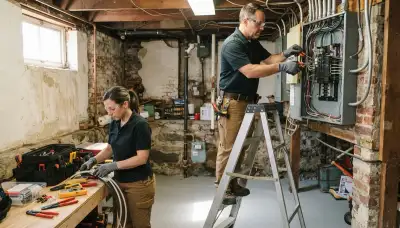
Local electricians who work these houses regularly know where the panel sits, what is under the floor, and how the wiring was run the first time. That knowledge decides whether a job takes a morning or opens walls, and it shapes every estimate before a tool comes out.
These homes commonly need panel replacements and circuit additions to keep up with modern loads. Electricians serving electrical contractor in Roxbury Crossing, MA see the same pattern in attached row houses nearby.
If an outlet feels warm or a breaker will not stay reset, do not wait for the next trip - get it looked at before a small problem becomes a wiring repair.
Electrical Work Matched to How Dorchester Center Homes Are Built
An off-the-shelf approach fails here because the way the work reaches the wiring depends entirely on what is under the floor and how the house sits on its lot. Basements that run the full footprint of the house make new circuits straightforward; finished ceilings above them do not.
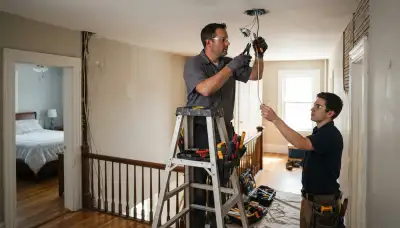
Attached two- and three-family homes share walls and sometimes share service equipment, which changes what a panel upgrade actually involves. Detached single-families on tight lots carry long outdoor runs to garages and sheds that aged on a different schedule than the house itself. Reliable ceiling fan installation in a finished third floor means routing wire through spaces that were never meant to be opened again.
Homes in Dorchester Center call for professional electrical panel installation, quality GFCI circuit work, specialist smoke detector installation, and reliable outlet repair - each one shaped by how the house was built and where the wiring runs.
What the Age of Dorchester Center Homes Still Decides Today
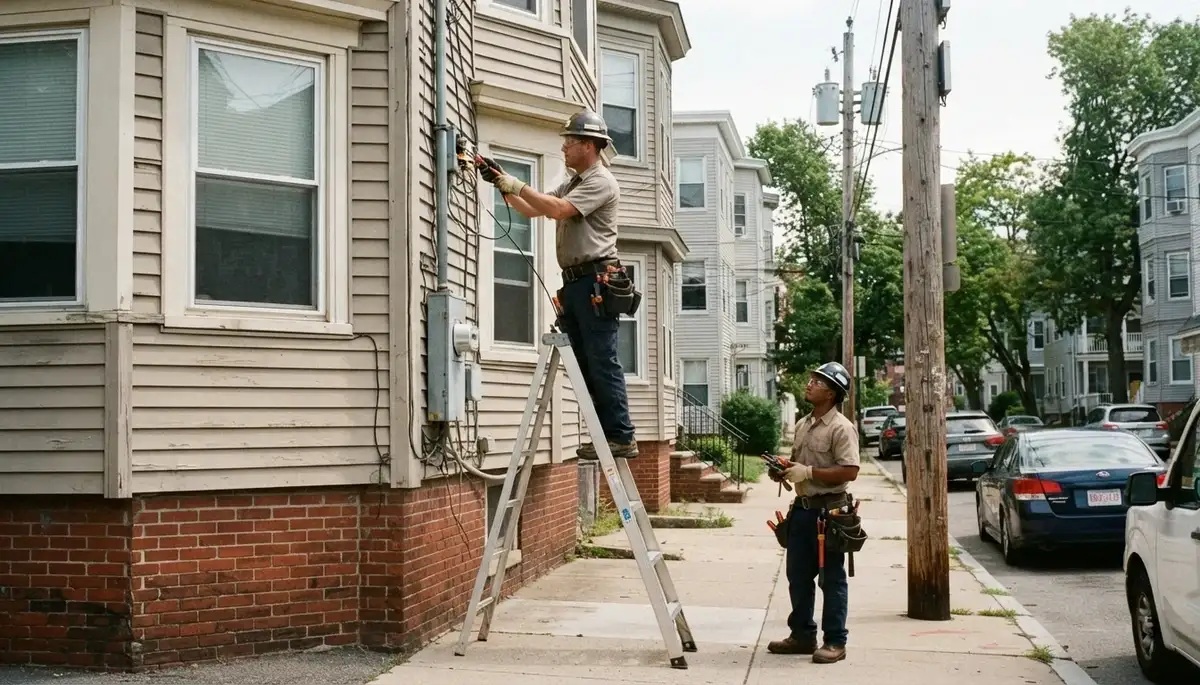
Most homes in Dorchester Center went up in the decades before and just after the Second World War, with a second wave through the fifties and sixties. Houses from those years were wired for 60-amp service, used two-prong ungrounded outlets throughout, and carried fuse boxes that were never replaced when the loads grew. Three things follow from that and still shape every job: the panel is almost certainly undersized, the grounding is absent or incomplete, and the circuit count was drawn for a house with far fewer appliances.
Fuses That Keep Blowing
A homeowner who replaces the same fuse twice in a month is not dealing with a bad fuse. The circuit is overloaded because it was sized for one or two fixtures and now carries a refrigerator, a microwave, and a counter full of small appliances. Left alone, the next failure is a tripped breaker that will not reset - or a wire that gets hot before anything trips at all.
Local electricians replace fuse boxes with modern breaker panels and divide overloaded circuits so each one carries a reasonable share of the load. Homeowners across Dorchester Center who have had this done stop losing power to the kitchen every time the coffee maker runs.
Two-Prong Outlets That Cannot Be Grounded
Two-prong outlets are a sign that the wiring behind them was installed before grounding was required. Plugging an adapter into them does not add a ground - it only changes the shape of the opening. Computers, televisions, and anything with a metal case depend on that ground to stay safe.
Electricians replace two-prong outlets with properly grounded three-prong receptacles or install the outlets with test and reset buttons that meet current requirements. Either correction removes the shock risk and stops the adapters from multiplying.
Wiring That Runs Warm at the Connections
Years of use loosen the connections at outlets and switches in any house, but homes from the late sixties and early seventies that used aluminum branch wiring face a sharper version of that problem. Aluminum expands and contracts more than copper, which works connections loose faster and leaves them running warm. An outlet warm to the touch is the thing the homeowner notices; the loose connection behind it is the thing that matters.
Electricians add the right anti-oxidant compound and compatible connectors at every aluminum termination, or re-wire the affected circuits in copper. Both the fire risk and the warm outlets go away.
A Panel That Was Never Sized for What Was Added
A car charger, a window air conditioner, or a chest freezer in the garage each draws more power than the original service anticipated. A panel that was sized for a much smaller load runs out of open slots and, past that point, runs out of capacity. The draw from a hot day multiplies what those added loads pull at once, and the panel has no room left to handle it.
Electricians add a subpanel or upgrade the main service to give the house the capacity it actually needs. After the work is done, homeowners can run the car charger and the air conditioning at the same time without watching the panel. Charlestown, MA electrical services address the same added-load problems in houses of similar age nearby.
Finished Basements That Block the Wiring Runs
When a basement was finished decades after the house was built, the ceiling went up over the wiring and the pipes. Running a new circuit from the panel to the second floor now means working around that finished ceiling instead of through open joists. The physical constraint does not make the job impossible, but it changes how long it takes and where the new wire can go.
Local electricians plan the route before the work starts, use existing chases where they exist, and patch only what must be opened. The result is a new circuit that reaches the room it needs to reach with the smallest footprint of disruption.
Call (617) 917-2122 to arrange a no-pressure visit with a local electrician who can look at the panel, the outlets, and the wiring and tell you exactly what the house needs.
On Call Electrical brings the same steady standard to every job in Dorchester Center, from a single outlet to a full panel replacement.

Full Electrical Services Available in Dorchester Center, MA
The work below covers the full range of what local electricians handle. Find the item that matches what the house needs and reach out to get it scheduled.
Urgent Electrical Repairs for Dorchester Center, MA Homes
- Electrical Repair - A breaker that will not stay reset or an outlet that stopped working needs attention before it gets worse.
- Outlet Repair - Outlets that spark, feel warm, or hold a plug loosely are a sign the connection behind them has failed.
- Switch Repair - A switch that clicks without result or flickers the light is a loose connection waiting to become an open wire.
- GFCI Circuits - Kitchens and bathrooms without the outlets with test and reset buttons are missing a protection that current requirements demand.
- Home Electrical Inspections - A full inspection finds what the homeowner cannot see: loose connections, undersized wiring, and panels that have run out of room.
If any of these match what the house is doing right now, a local electrician can look at it the same day.
Panel, Service, and Wiring Work for Dorchester Center, MA Homes
- Electrical Panel Upgrade - Homes wired for 60 or 100 amps need more capacity before a car charger or central air goes in.
- Electrical Panel Installation - Replacing a fuse box with a modern breaker panel gives the house a fresh starting point for every circuit.
- Electrical Wiring - Old cloth-wrapped wiring and aluminum branch circuits get replaced with copper that handles the load without running warm.
- Electrical Service - The connection from the street to the panel gets upgraded when the house has outgrown what was originally installed.
- New Construction Wiring - Additions and finished basements need wiring run from scratch, planned to meet what the new space will actually use.
These upgrades address what the house was originally wired for and bring it up to what it is being asked to run today.
Safety and Protection Work for Dorchester Center, MA Homes
- Smoke Detector Installation - Detectors placed where the house actually needs them, not just where the builder put one.
- Fire Alarm Installation - A connected system that covers the whole house, including finished basements and upper floors.
- Whole Home Surge Protection - A single power event can damage every appliance and device in the house; surge protection at the panel stops it.
- Lightning Surge Protection - Homes with tall trees nearby or exposed service entrances are more exposed to voltage spikes from a strike.
- Home Energy Audit - Finding where the house wastes power starts with knowing what every circuit carries and how the panel is loaded.
Each of these addresses a risk the homeowner can picture: a fire that starts in the wall, a surge that kills the refrigerator, a detector that was never in the right room. Getting them right means the house is protected whether anyone is home or not, and it means the next electrical inspection does not turn up a list of corrections.
Lighting, Outdoor, and Added-Load Work for Dorchester Center, MA Homes
- Electric Car Charger Installation - A dedicated circuit sized for the charger the car actually needs, run from a panel that has room for it.
- Recessed Lighting Installation - Fixtures set into the ceiling without the junction boxes and surface conduit that older homes accumulated over decades.
- Landscape Lighting - Outdoor circuits run to yard fixtures that stay dry and hold their connection through years of use.
- Security Lights - Motion-activated fixtures placed where they cover the approach to the house, wired to a circuit that does not share with anything else.
- Generator Installation - A standby or transfer-switch setup that keeps the critical circuits running when the main supply goes out.
These are the loads that Dorchester Center homes are being asked to carry now, on panels and wiring that were designed for a much smaller list. Getting each one installed correctly means the house handles it without the panel running out of room or the wiring running warm.