The network of electrical contractors in Boston reaches every block in Dorchester, where most homes were built before the forties and carry wiring that was never sized for today's loads. Panels in these houses often run out of room before they run out of years, and professional electrical panel upgrade work is one of the most common calls local electricians field here.
Homeowners in Dorchester call a local electrician because someone who knows these houses does not have to guess where the panel is, how the wiring runs, or why the breaker keeps tripping.
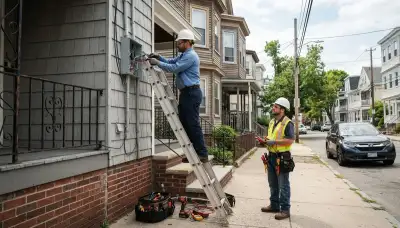
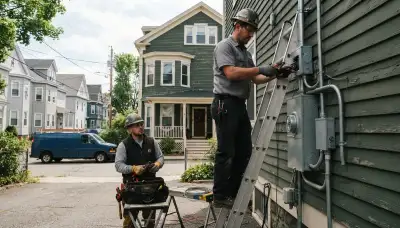
Knowing Dorchester Homes Changes What the Work Involves
Most houses in Dorchester went up before the forties, built as wood-frame structures over full basements. A local electrician who has worked in these homes knows where the fuse box sits, how the knob-and-tube runs through the framing, and what that means before the first tool comes out.
These homes most often need panel replacements and grounding updates, two jobs that look simple on paper but take longer when the basement is tight and the wiring is original. Homeowners in nearby Roxbury, MA electrical services face the same construction, and the same surprises inside the walls.
If something in your home has been tripping, flickering, or running warm, the right time to have it looked at is before it gets worse.
Electrical Work Matched to How Dorchester Houses Are Built
An off-the-shelf approach fails in Dorchester because these homes were built close together, with basements that double as utility space and framing that was never meant to carry modern circuit loads. Running a new circuit is not always a morning of work when the walls are plaster and the joists are tight.
Detached two- and three-family homes here carry their own outbuildings and long outdoor runs that aged separately from the house itself, while attached row homes sometimes share service equipment that complicates any single-unit upgrade. Expert ceiling fan installation in a plaster-ceiling home, for instance, means opening carefully and closing cleanly.
Local electricians working across Dorchester handle quality GFCI circuit protection near water sources, reliable generator installation for homes that lose power when the grid strains, specialist smoke detector installation in older framing where interconnected alarms matter most, and professional recessed lighting installation in rooms where the original fixtures no longer meet the load.
What the Age of Dorchester Homes Still Decides Today
Most houses in Dorchester were built before the forties, a time when sixty-amp service was standard, two-prong outlets were the norm, and grounding was not required. Three things follow from that directly: the panels were sized for far less than a modern household draws, the outlets near sinks and tubs have no reset buttons, and the wiring in many of these homes was never designed to carry a ground.
Fuses Where Breakers Should Be
A homeowner in a house this age may still have a fuse box in the basement. When a circuit overloads, the fuse blows, and if someone has put in an oversized fuse to stop the nuisance, the wiring behind it is carrying more than it was built for. That is a fire risk that grows quietly.
Local electricians replace fuse boxes with modern breaker panels sized for what the house actually runs today. Homeowners across Jamaica Plain, MA residential electricians have had the same work done, and the result is a panel with room to grow.
Outlets That Have No Ground
Two-prong outlets throughout a house mean the wiring behind them was installed before grounding was required. Plugging a three-prong adapter into a two-prong outlet does not add a ground; it only changes the shape of the opening. Sensitive electronics and appliances that depend on a ground path are left without one.
Adding grounded outlets to a house wired this way means running a ground conductor to each location or installing GFCI-type outlets where the code allows it as a substitute. Either way, the homeowner ends up with outlets that work the way modern equipment expects them to.
Wiring That Runs Warm Under Load
Homes built in Dorchester from the mid-sixties through the early seventies sometimes have aluminum branch wiring, installed during a period when copper was expensive. Aluminum wiring expands and contracts more than copper, and over decades the connections at outlets and switches work loose. A warm outlet or a light that dims on one circuit is often the first sign.
Local electricians address aluminum wiring by replacing devices with ones rated for aluminum, adding approved connectors at every termination, or replacing the runs entirely. Both approaches stop the loosening and the heat that follows.
A Panel That Was Never Sized for What Got Added
A sixty- or hundred-amp service was adequate when these houses were built, but decades of additions have changed what the house draws. An electric car charger, a window air conditioner added to every room, or a chest freezer in the basement each pulls load the original service was never sized for. On a warm day with everything running, the panel reaches its limit.
Adding capacity means upgrading the service entrance and replacing the panel with one sized for what the house carries now and what the homeowner may add next. After the upgrade, a car charger, a new appliance, and the air conditioning can all run at the same time without the panel reaching its edge.
Basement Access That Slows Every Job
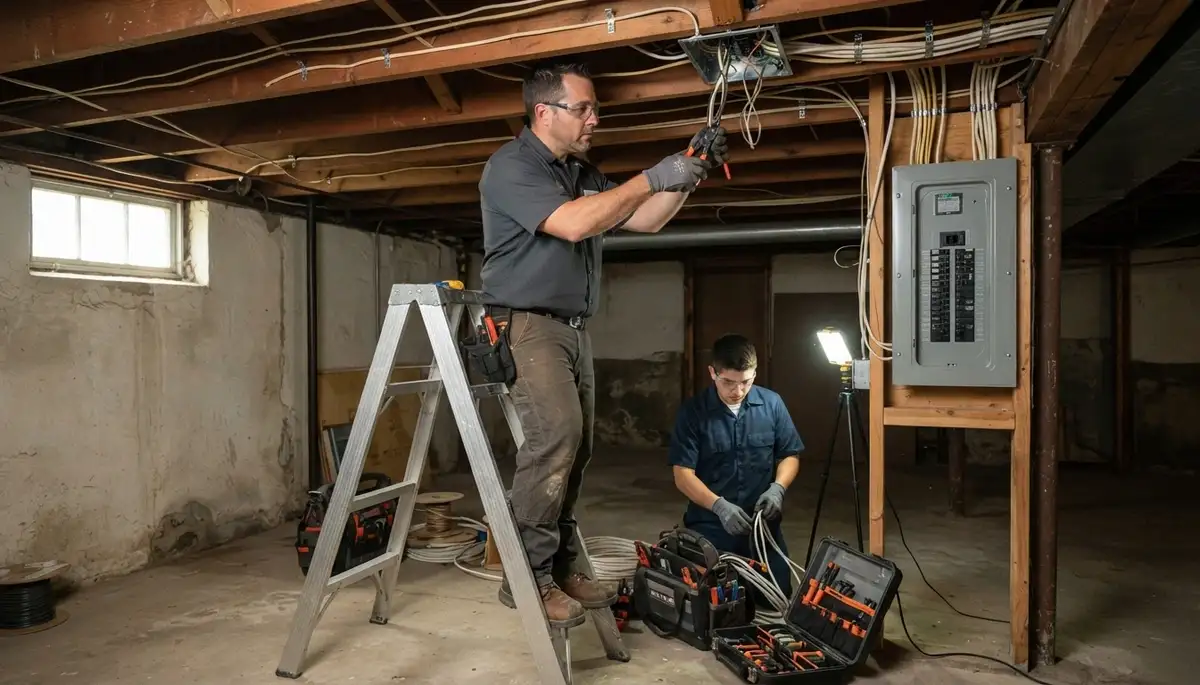
In a Dorchester home built before the forties, the basement is often low-ceilinged, divided by old partitions, and shared with the furnace, the water heater, and decades of storage. Reaching the panel, pulling new wire, or accessing a junction box takes longer when the path to it is tight.
Local electricians working in these basements plan the job before they start, use flexible conduit where rigid would not fit, and route new circuits through the available paths rather than opening walls unnecessarily. The work gets done without turning the basement into a construction site.
Call (617) 917-2122 to arrange a no-pressure visit from a local electrician who knows Dorchester homes and can tell you what the job actually involves before any work begins.
On Call Electrical handles the work in Dorchester homes the way it needs to be done, and it holds.

Full Electrical Services Available in Dorchester, MA
The list below covers the range of work local electricians handle for Dorchester homeowners. Find the item that matches what you are dealing with and reach out.
Urgent Electrical Repairs for Dorchester, MA Homes
- Electrical Repair - A breaker that will not reset or an outlet that stopped working in a house this age is not a nuisance; it is a sign of something that needs attention now.
- Outlet Repair - Outlets that feel warm, spark when something is plugged in, or simply do not hold a plug are common in homes where the devices have never been replaced.
- Switch Repair - A switch that crackles, runs warm, or only works when the toggle is held at a precise angle has a connection that has been failing for some time.
- GFCI Outlets - Bathrooms and kitchens in older Dorchester homes often have standard outlets where reset-button outlets are now required near water.
- Home Electrical Inspections - Before buying or renovating a house built before the forties, an inspection tells you exactly what the wiring is, where it fails, and what it will cost to bring it up.
If something in your home is not behaving the way it should, the answer is a call, not a wait.
Panel, Capacity, and Wiring Work for Dorchester, MA Homes
- Electrical Panel Upgrade - A panel with no empty slots, a box full of fuses, or a service sized for a fraction of what the house draws today needs to be replaced, not patched.
- Electrical Panel Installation - When the existing panel is beyond repair or in the wrong location for how the house is used now, a new installation puts it where it belongs.
- Electrical Service - The service entrance is the starting point for everything the house runs; if it is undersized, every load downstream is affected.
- Electrical Wiring - Original wiring in a house built before the forties was sized for far fewer circuits than the house runs today, and it was not installed with modern safety requirements in mind.
- New Construction Wiring - Additions and finished basements in Dorchester homes need wiring that meets current requirements, not wiring spliced into whatever was already there.
Upgrading the panel and the wiring behind it is the work that makes every other improvement in the house possible without tripping a breaker or losing a circuit.
Safety and Protection Services for Dorchester, MA Homes
- Smoke Detector Installation - In a wood-frame house built before the forties, interconnected smoke detectors that all sound when one trips are not optional; they are the difference between warning and not.
- Fire Alarm Installation - A full fire alarm system in a multi-unit Dorchester home protects every occupant, not just the one closest to the source.
- Whole Home Surge Protection - A single surge through the service entrance can damage every device in the house; protection at the panel stops it before it reaches anything.
- Lightning Surge Protection - A direct or nearby strike sends a spike through the wiring that a single power strip cannot absorb; panel-level protection handles what a strip cannot.
- Home Energy Audit - An audit in a house this age finds where the electrical system is working harder than it needs to and what a targeted upgrade would save.
Every one of these services addresses a risk that is easy to picture and harder to recover from after the fact. A house built before the forties carries risks that a newer home does not, and the protection available today was not an option when these homes were wired. Getting the right protection in place now means the house is ready for what it carries, not just for what it was built for.
Lighting, Outdoor, and Added-Load Work for Dorchester, MA Homes
- Recessed Lighting Installation - Adding recessed lights to a plaster ceiling in a Dorchester home takes more care than a drywall job, but the result fits the house rather than fighting it.
- Landscape Lighting - Outdoor lighting on a lot where the wiring runs have been in the ground for decades often needs to be replaced before new fixtures go in.
- Security Lights - Motion-activated lights on a detached garage or along a tight side yard run off circuits that were not always planned for outdoor loads.
- Electric Car Charger Installation - A Level 2 charger needs a dedicated circuit sized for it; a panel that is already full needs to be upgraded before the charger can go in.
- Ceiling Fan Installation - Adding a ceiling fan to a room in a Dorchester home that was not wired for one means running a new circuit, not just swapping a fixture.
Outdoor runs, added loads, and new fixtures all ask more of a house than it was built to give. The work that makes them safe is the work that makes them last.