The homes in Chestnut Hill were mostly built from the 1920s through the 1950s, and the electrical contractor in Boston network that serves them knows what that means: fuse boxes that were never swapped out, two-prong outlets throughout, and panels sized for a load far smaller than what a household runs today. Reaching those panels and running new circuits through plaster walls and finished basements takes more planning than a newer house would. Calling a professional electrical panel upgrade specialist who already knows these houses saves time and avoids surprises.
Homeowners here call a local electrician rather than a general one because the work inside a Chestnut Hill home built before air conditioning was standard requires someone who has opened those walls before and knows what to expect.
What Local Electricians Know About Chestnut Hill Homes
Most of the houses here went up between the twenties and the fifties, built as wood-frame structures over full basements with plaster-and-lath walls. A local electrician knows where the panel sits, how the circuits were laid out, and which walls can be fished without tearing them open.
Two kinds of work come up constantly in these homes: replacing fuse boxes that have run out of room and adding circuits to kitchens and bathrooms that were wired before modern appliances existed. Homeowners in Brookline, MA deal with the same issues in houses built the same way.
Getting the problem looked at early keeps a small fix from turning into a job that opens ceilings and runs for days.
Electrical Work Matched to How Chestnut Hill Homes Are Built
An off-the-shelf approach fails here because plaster walls, finished basements, and tight utility closets all change how a circuit gets from the panel to the room that needs it. The path that works in a newer house with open framing does not exist in these homes.
Detached homes on larger lots carry long outdoor runs to garages and sheds that have aged separately from the house. Attached homes share walls that complicate where conduit can go. Each situation changes what the job actually involves, and expert ceiling fan installation in a plaster ceiling is a different task than the same job in drywall.
Four services that fit what these homes need most: quality GFCI circuit installation for kitchens and bathrooms that were wired before those protections existed, specialist generator installation for homes whose panels need a transfer switch added, reliable electrical wiring to replace cloth-insulated runs found inside these older walls, and expert home electrical inspections to map what is still original and what has already been updated.
When Chestnut Hill Homes Were Built Still Shapes What They Need
Most of the homes here went up in the twenties, thirties, and forties, when a 60-amp service and a handful of circuits covered everything a household used. That meant no grounding, no arc protection, and wiring run in cloth insulation that has been carrying current for eight decades. Three things follow directly from that: the panel is almost certainly undersized, the outlets throughout the house are two-prong, and the insulation on the wiring has grown brittle in ways that are not visible from outside the wall.
Fuses That Will Not Reset
A fuse box that keeps blowing the same fuse is telling the homeowner that one circuit is carrying more than it was sized for. In these homes, that usually means a kitchen or bathroom added an appliance the original wiring never anticipated. Left alone, the next step is a fire inside the wall rather than a blown fuse in the box.
Local electricians replace the fuse box with a breaker panel sized for what the house runs today, then add the circuits the original layout never included. Homeowners in Cambridge, MA with houses from the same period have made the same upgrade.
Outlets Warm to the Touch
An outlet that feels warm when nothing is plugged in is a sign that the connection behind it has loosened or that the wiring feeding it is carrying more current than it handles well. In homes built before the late 1960s, that wiring is copper run through cloth insulation, and a loose connection in that material generates heat that the insulation cannot shed safely.
Replacing the outlet and tightening or re-terminating the connection behind it stops the heat at the source. The homeowner gets an outlet that works without worry and a connection that will not loosen again under normal use.
Two-Prong Outlets Throughout the House
Two-prong outlets mean the circuits feeding them were never grounded. Decades of use have not changed that, and a three-prong adapter does not add grounding - it only changes the shape of the opening. Appliances that expect a ground path do not get one, and a fault in those appliances has nowhere to go except through the device or the person holding it.
Adding grounding to existing circuits or running new grounded circuits to the rooms that need them fixes both problems: the outlets accept modern plugs and faults travel safely to ground instead of through the appliance.
A Panel That Was Never Sized for What Was Added
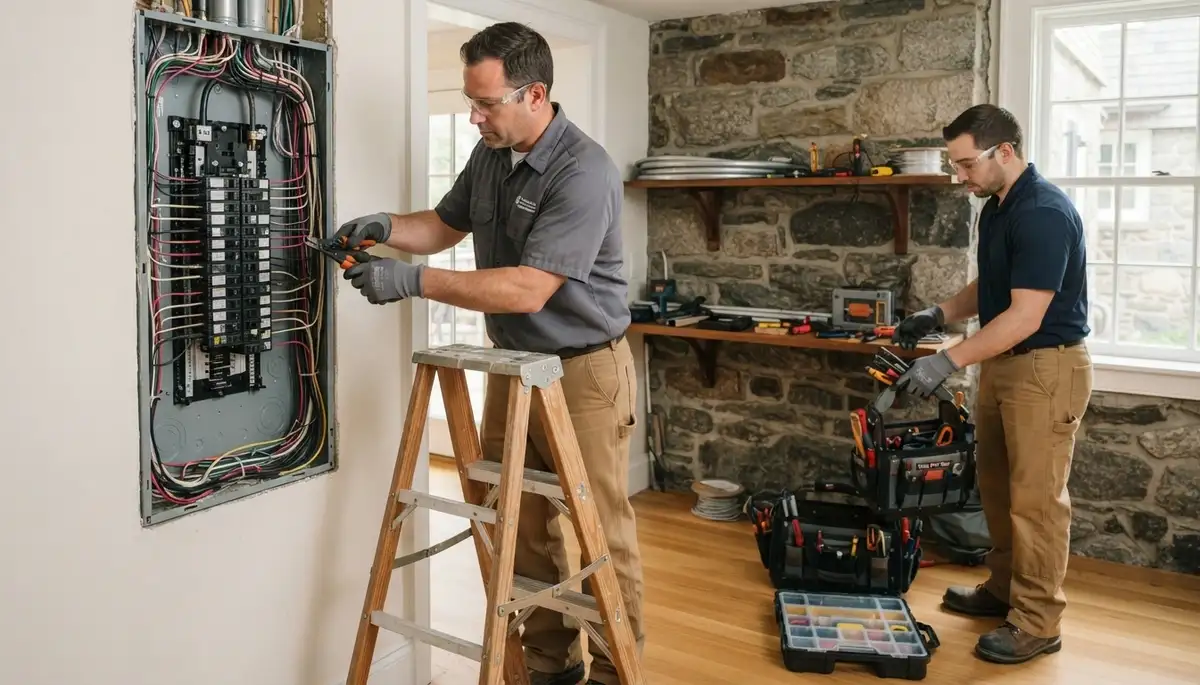
A car charger, a new air conditioning unit, or a pool pump added to a home whose panel was sized for a 1940s household pushes that service past what it was built to handle. On a hot day when the air conditioning is running, the charger is drawing current, and the kitchen is in use, the panel is carrying a load it was never designed to see.
Adding a subpanel or upgrading the service gives the house the capacity to run what the homeowner has added without tripping breakers or stressing the wiring. Once the upgrade is in place, a car charger, air conditioning, and a full kitchen can all run at the same time without a second thought.
Finished Basements That Block the Path
In a Chestnut Hill home where the basement has been finished, the panel may be accessible but the ceiling above it is not. Running a new circuit from the panel to a room on the first floor means finding a path through finished walls and ceilings without tearing them open.
Local electricians who have worked in these homes know how to fish wire through plaster and finished drywall using the gaps the original builders left, keeping the work clean and the disruption to a finished space as small as the job allows.
Arrange a no-pressure visit with a local electrician by calling (617) 917-2122 - a quick look at the panel and the wiring tells you what the house actually needs before any work begins.
On Call Electrical handles the work in Chestnut Hill homes the way it was meant to be done.

Full Electrical Services Available in Chestnut Hill, MA
The list below covers the range of electrical work available to homeowners here. Find what matches your situation and reach out to get started.
Urgent Electrical Repairs for Chestnut Hill, MA Homes
- Electrical Repair - A breaker that will not reset or an outlet that stopped working entirely needs a look before the problem spreads to other circuits.
- Outlet Repair - Outlets that spark, feel warm, or accept a plug loosely are a sign the connection behind the wall has failed.
- Switch Repair - A switch that buzzes, feels warm, or controls a light intermittently has a loose connection that gets worse under load.
- Ceiling Fan Repair - A ceiling fan that wobbles, hums, or runs only on one speed has a wiring or motor connection issue that a repair visit can resolve.
- Smoke Detector Installation - Detectors that are more than ten years old or that chirp without a dead battery need to be replaced, not silenced.
Any of these problems gets worse the longer it sits. A repair visit now is shorter and less expensive than the job it becomes if the issue is left alone.
Panel, Service, and Wiring Work for Chestnut Hill, MA Homes
- Electrical Panel Upgrade - A panel with no empty slots, a fuse box still in place, or breakers that trip under normal load is ready to be replaced with one sized for what the house runs today.
- Electrical Panel Installation - Homes adding a garage, a workshop, or a finished basement often need a subpanel installed closer to the new load.
- Electrical Wiring - Cloth-insulated wiring found in homes built before the fifties has reached the end of its safe life and needs to be replaced circuit by circuit.
- Electrical Service - A service that was sized for a smaller load than the house now carries needs to be brought up to match what the homeowner has added.
- New Construction Wiring - An addition, a finished attic, or a converted garage needs wiring run from scratch, matched to the panel capacity already in the house.
Homes built in the twenties through the forties were wired for a household that used a fraction of what a modern family runs. Matching the wiring to the load is the single most important upgrade these houses get.
Safety and Protection Work for Chestnut Hill, MA Homes
- GFCI Circuits - Kitchens, bathrooms, and any outlet near water need the protection of a circuit that shuts off the moment it detects a ground fault.
- GFC Outlets - Outlets with test and reset buttons replace two-prong outlets in the rooms where water and electricity share a wall.
- Whole Home Surge Protection - A single surge from the utility line or a nearby strike can damage every appliance and device connected to the panel at once.
- Lightning Surge Protection - Homes with detached garages, tall trees nearby, or exposed service entrances are at higher risk when a strike occurs close to the property.
- Fire Alarm Installation - A hardwired alarm system that connects every detector in the house gives the homeowner warning from any room, not just the one where the fire starts.
A Chestnut Hill home with original wiring, a fuse box, and no surge protection is carrying risks that a single inspection visit can identify and a series of targeted repairs can eliminate. Getting that inspection done is the first step, and it changes what every repair after it costs.
Lighting, Outdoor, and Added-Load Work for Chestnut Hill, MA Homes
- Recessed Lighting Installation - Plaster ceilings in these homes can accept recessed fixtures when the right housing is used and the circuit feeding them is sized for the added load.
- Landscape Lighting - Outdoor lighting runs that were added years ago often share a circuit with indoor loads they were never meant to carry alongside.
- Electric Car Charger Installation - A Level 2 charger draws more current than most original panels in these homes were sized for, and the circuit for it needs to be planned against what is already running.
- Security Lights - Motion-activated lights on detached garages and along long driveways need their own circuit run from the main panel, not tapped off an existing outdoor outlet.
- Generator Installation - A standby generator added to a home with a small panel requires a transfer switch and sometimes a service upgrade before the generator can carry the loads the homeowner needs.
The homes in Chestnut Hill, MA are being asked to carry loads that did not exist when they were built. Running the right circuit for each added load keeps the panel from being pushed past what it can safely handle.