On Call Electrical
Call Us Now! (617) 917-2122

Attic Fan Installation and Repair Across Boston Homes

Boston's older wood-frame and row homes carry more panel load than they were built for, and a properly wired attic fan starts with knowing what the box can handle.

Call Us Now or Request a Free Quote

(617) 917-2122

Attic Fan Work Boston Homeowners Can Count On

Attic fan installation in Boston means working inside houses that went up from the early 1900s through the mid-twentieth century, most of them wood-frame row homes and attached two- and three-family structures with panels that were sized for a fraction of today's load. Electrical contractors serving Boston know that running a new attic fan circuit on a fuse box or a 60-amp panel is not just an installation question, it is a capacity question. Homeowners who skip that check often find their professional electrical panel upgrade becomes the first job, not the attic fan itself.

In Boston, most of these houses sit over a basement, which means the panel is typically on a basement wall and the attic is two or three floors above it. Running a dedicated circuit for an attic fan in that configuration means pulling wire through finished walls and ceilings, not just dropping a line from an open joist bay. The job takes longer than it does in a newer ranch or a house with an accessible chase. Postponing it means the attic continues to trap heat that radiates down into living space and forces whatever cooling exists to run harder on a panel that was already working at its limit. Homeowners who have added window units, a chest freezer, or a car charger since the house was built are already pushing circuits that were never counted for those loads, and an attic fan added without a proper circuit assessment can be the thing that finally makes a breaker stop resetting and start failing. Pairing the attic fan work with quality electrical wiring inspection catches those problems before they compound.
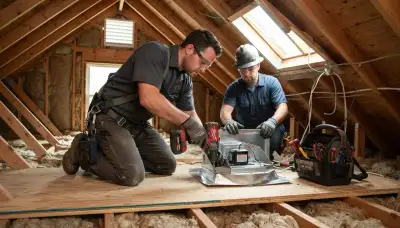
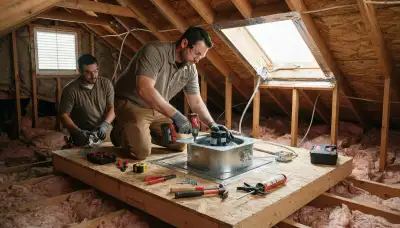
Attic fan installation and repair services for Boston, MA homes by On Call ElectricalAttic fan installation and repair services for Boston, MA homes by On Call Electrical

What type of electrical project is this?
  • TCPA Compliance
  • Comodo SSL Certificate
  • True Trust

Related Electrical Work Local Contractors Handle Around Attic Fan in Boston

Attic fan work rarely stands alone in a Boston home. These four services come up alongside it because the same houses, the same panels, and the same wiring runs are involved.

Panel Capacity for Boston's Older Homes

A fuse box or a panel with no open slots cannot safely feed a new attic fan circuit. In houses built before the mid-twentieth century, the panel was sized for lights and a handful of outlets, nothing more. Contractors assess what the box can handle before any new circuit goes in.

Get a Panel Assessment

Whole House Fan Installation for Row Homes

An attic fan and a whole house fan work differently, and Boston's attached row homes require careful placement of both to avoid pulling air across shared walls in ways that defeat the purpose. Expert whole house fan installation accounts for the way these houses share structure and airflow paths with neighbors.

Schedule Whole House Fan Work

Outlet Repair in Older Wood-Frame Houses

Two-prong outlets and outlets that run warm to the touch are common findings in Boston homes from the early and mid-twentieth century. Adding an attic fan circuit is a good moment to address outlets on the same floor that have never been updated, before the load on that branch grows further.

Schedule Outlet Repair

Generator Installation for Homes with Attic Fans

A home that depends on an attic fan for heat management needs a backup plan when power goes out. In Boston's attached and row homes, where basements house the panel and the generator connection point, proper transfer switch placement matters. Reliable generator installation keeps the fan running when the grid does not.

Get a Generator Quote

On Call Electrical
Request a Free QuoteCall now(617) 917-2122

How the Load on a Boston Home Shifts Through the Year and What It Means for Attic Fan

The same house carries a different electrical demand in each season. Understanding that pattern helps homeowners time attic fan work before the pressure peaks.

Spring Attic Fan Readiness Across Boston, MA

Spring is the window to run a new attic fan circuit, replace a panel that cannot support one, or bring outdoor circuits back into use after months of low demand. A Boston home with a fuse box or a panel already carrying added loads needs that work done before cooling season puts the full weight on it.

Schedule Spring Attic Fan

Summer Attic Fan Demand in Boston, MA Homes

A panel sized in the fifties running central air, window units, and an attic fan through a long summer is a panel that stops hiding its limits. The attic fan is often what tips an already-loaded circuit into repeated trips. Homeowners who notice lights dimming when the fan kicks on should look at specialist GFCI circuit and panel work before the next cooling season starts.

Schedule Summer Attic Fan

Fall Attic Fan Service for Boston, MA Houses

Fall is the moment to fix what summer revealed. An attic fan that tripped breakers or ran on a circuit shared with cooling equipment flagged a problem that does not go away when the temperatures drop. Addressing the wiring and panel issues in fall means the house enters winter with circuits that can carry the next load.

Schedule Fall Attic Fan

Winter Attic Fan Inspection Around Boston, MA

In winter, a Boston home stacks electric heat, space heaters, and holiday lighting onto circuits that were built for far less. The attic fan sits idle, but the wiring feeding it is part of the same panel carrying all of that. An inspection in winter catches overloaded circuits and connections that heat up under the combined draw before they become a repair emergency in spring.

Schedule Winter Attic Fan

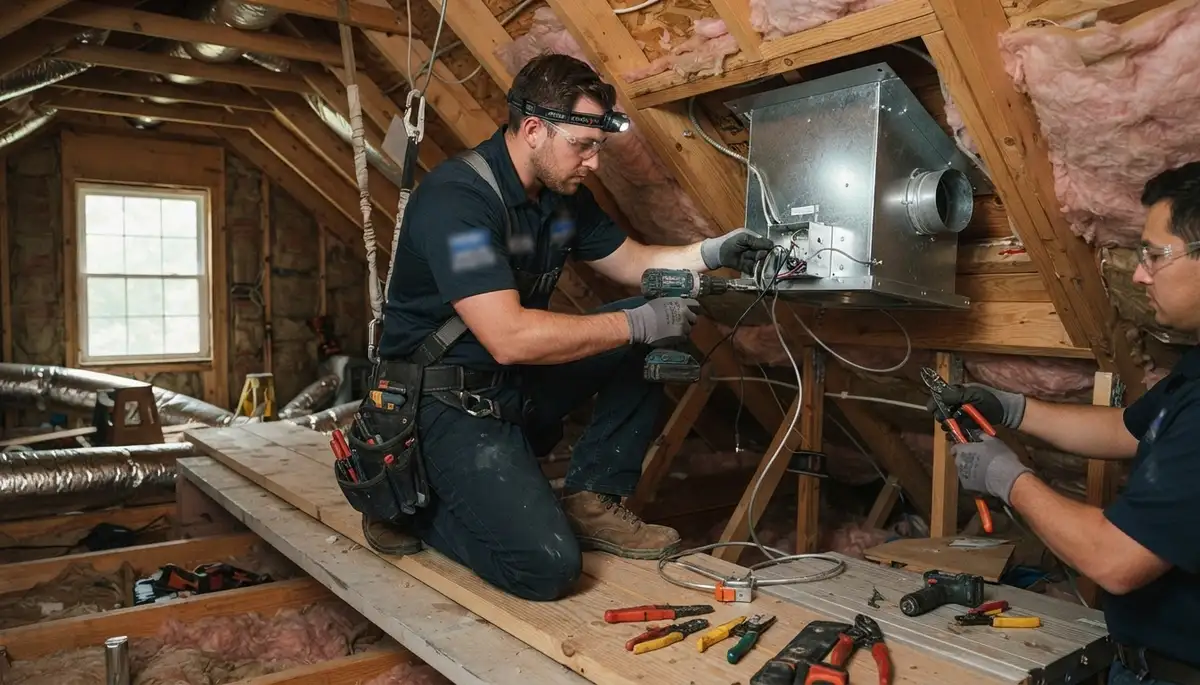
Attic fan installation and repair services for Boston, MA homes by On Call Electrical

Boston Homeowners Finding Electrical Contractors Through On Call Electrical

Electrical Contractor Coverage Across Boston, MA

On Call Electrical connects homeowners across the Greater Boston area with local electrical contractors ready to help. From the older established neighborhoods of Charlestown to the growing residential streets of Revere, coverage reaches every corner of the area, no matter where the home sits.

Boston homeowners in Watertown, with its outlying properties on larger lots, have the same access to local electrical professionals as anyone else across the region, wherever the home is located.

Electrical Contractor Coverage Across Boston and Surrounding Neighborhoods

Find your neighborhood in this Boston-area zip code list and see where On Call Electrical answers residential electrical repair calls across the metro.

  • Roxbury Crossing, MA (02120)
  • Dorchester Center, MA (02124)
  • Roxbury, MA (02119)
  • Charlestown, MA (02129)
  • Chelsea, MA (02150)
  • Somerville, MA (02143)
  • Everett, MA (02149)
  • Cambridge, MA (02139)
  • Allston, MA (02134)
  • Winthrop, MA (02152)
  • Jamaica Plain, MA (02130)
  • Brookline, MA (02446)
  • Brighton, MA (02135)
  • Medford, MA (02155)
  • Revere, MA (02151)
  • Malden, MA (02148)
  • Watertown, MA (02472)
  • Chestnut Hill, MA (02467)
  • Roslindale, MA (02131)
  • South End, MA (02118)
  • Back Bay, MA (02116)
  • East Boston, MA (02128)
  • Hyde Park, MA (02136)
  • Mattapan, MA (02126)
  • Arlington, MA (02474)
  • Belmont, MA (02478)

Find a dependable local professional and have the work done right.

  • Complimentary Quotes
  • Vetted Pros
  • Prompt Replies

Electrical Contractor FAQs for Homeowners in Boston, MA

Electrical contractor work in Boston, MA covers homes built across several generations, each with its own wiring history. These plain answers address urgent symptoms, what jobs actually involve, how to add modern loads to older systems, and how to find and compare local contractors.

  • Turn off the circuit at the panel and stop using that outlet immediately. A warm outlet in a Boston home signals heat building at a connection, which does not resolve on its own. Do not probe the outlet or the wiring behind it. Electricians around Boston offer around-the-clock emergency response, and heat at a connection is not a problem to leave until morning.

  • A contractor starts with a load assessment to confirm the panel can accept another circuit, then traces the most direct path from the panel to the new location. In Boston homes with full basements, runs often travel through the basement ceiling and up through interior walls, which keeps most of the work out of finished surfaces. Permit and inspection follow rough-in before walls close.

  • A burning smell, an outlet warm to the touch, or lights that dim when another appliance starts are urgent in Boston homes, because each points to heat developing at a connection or a circuit carrying more than it was built for. A single dead outlet with no other symptoms is inconvenient but not an emergency. Heat and smell cannot wait.

  • On Call Electrical connects homeowners in Boston, MA with local contractors and makes it straightforward to receive and compare multiple quotes for the same job. Comparing quotes on scope, not just on price, shows whether each contractor is planning the same work. On Call Electrical matches and facilitates; the contractors it connects you with are the ones who do the work.

  • Before any charger goes in, a contractor checks whether the service panel in a Boston home can handle the added draw. Many pre-war Boston homes were built with 60 amp service, sized for a load that predates central cooling and modern appliances. A car charger typically needs a dedicated 240-volt circuit, and that often means a panel upgrade to 100 or 200 amp service first.

  • The number is printed on the main breaker inside the panel door, usually 60, 100, or 200 amps. In Boston homes, the panel is typically in the basement near the utility entry point. That number sets a hard ceiling on what the house can run at once. A 60 amp panel cannot safely support a car charger, added cooling, and a full modern kitchen without an upgrade.

  • The bulk of Boston's housing stock went up before and just after World War II, which means knob and tube wiring is still present behind the walls of many homes here in Boston. That system has no ground wire, degrades where insulation was piled against it over the decades, and cannot support GFCI protection without additional work. A home electrical inspection confirms what is actually there.

  • Price follows scope. In a Boston, MA row house, the contractor must account for where the service enters the building, how much clearance exists around the panel, and whether the existing branch circuits can be reused or need replacement. Shared walls and tight utility spaces can add labor. Comparing quotes on what each contractor plans to replace, not on the bottom line alone, reveals the real difference.
